
Cover image: AI-generated illustration created with ChatGPT. The product photos in the linked reviews are real photos from my tests.
An ergonomic home office has four building blocks: a height-adjustable desk, an office chair that really fits your height, a monitor that is easy on the eyes, and movement in between. I have worked from home for years and have covered all four areas with my own tests. Here you find the results bundled, with measurements and recommendations by budget and body height. Some of the linked reviews are only available in German.
In short
Start with the desk and chair, because they determine your posture all day. A stable desk that goes up to at least 125 cm (49 in) and a chair with seat depth adjustment and an adjustable lumbar support are the basis. Only then are a monitor upgrade and a walking pad worth it.
1. The height-adjustable desk: stability beats features
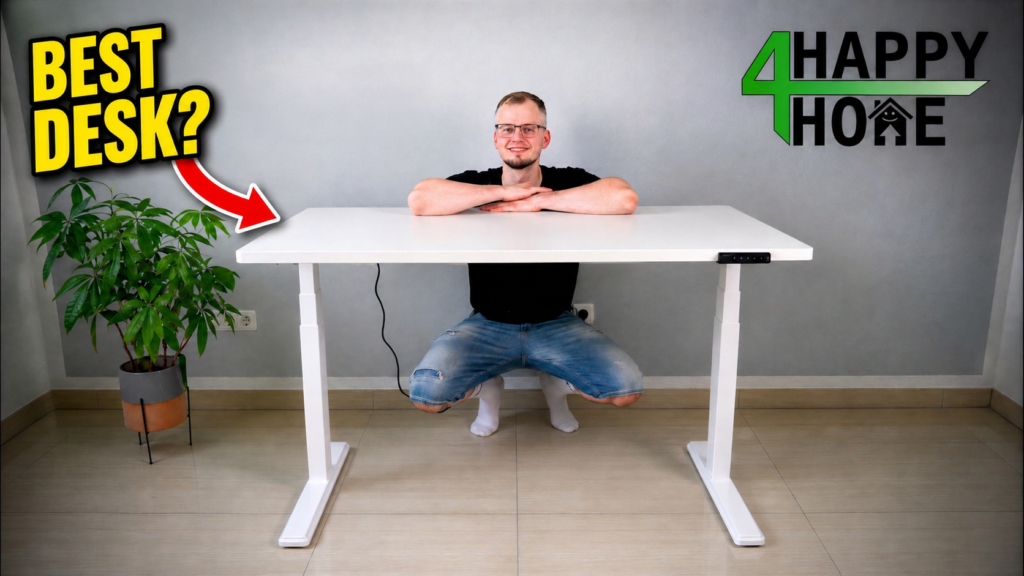
With a sit-stand desk, what matters is not the number of memory positions but how stable it is at standing height. The Vernal Core3 was the most stable desk in my tests so far: it goes up to 128 cm (50.4 in), carries up to 160 kg (350 lb) and stayed calm even at maximum height when I leaned on it or bumped it from the side. Assembly took 57 minutes with the supplied tools, and the anti-collision system reacted at every level I tested.
Its predecessor, the Vernal Temina (German review), offers a similar height range of 60 to 125 cm with pre-assembled electronics and a 15-year warranty, but wobbles slightly at the top. The Ergotopia Desktopia Pro X (German review) scores with an OLED control panel, standing tracking and an elegant walnut look. The compact WalkingPad standing desk (German review) tops out at 120 cm and 100 kg, too low for tall people.
| Model | Height range | Load capacity | Stability at the top | My rating |
| Vernal Core3 | 63.3 – 128 cm | 160 kg dynamic | very good, slight give | 4.7 / 5 |
| Vernal Temina | 60 – 125 cm | 160 kg | good, slight wobble | 4.6 / 5 |
| Ergotopia Desktopia Pro X | 62.3 – 127 cm | 80 kg dynamic | good | 4.6 / 5 |
| WalkingPad standing desk | 70 – 120 cm | 100 kg | wobbles at the top | 3.9 / 5 |
How high does your desk need to go?
Rule of thumb from my tests: at 1.86 m (6 ft 1 in) my ergonomic standing height is around 124 cm. A walking pad adds 7 to 13 cm depending on the model, so 127 to 128 cm are needed. If you are taller than 1.90 m or want to use a walking pad, check the maximum height before buying. That is exactly where many cheap desks fail.
2. The office chair: seat depth and lumbar support are decisive
An office chair has to fit your body, not the look of your office. For tall people, seat depth adjustment is the most important point so that the thighs are supported. The VALKENSTOL M8 (German review) is designed for people up to 2.00 m and 150 kg according to the manufacturer, has a lumbar support adjustable in height and depth, 5D armrests with rubberised pads and was assembled in 16 minutes and 45 seconds in my test.
The VALKENSTOL M6 is the version up to 1.95 m with particularly easy assembly and wide 3D armrests, but its lumbar support cannot be adjusted in depth. The M5 fits 1.65 to 1.90 m and offers very good value, but has no adjustable lumbar support. The CLOUVOU CleverSeat with an aluminium base, 4D armrests and 150 kg capacity is a high-quality alternative for medium heights. All four chair reviews are in German.
3. The monitor: size, resolution and eye comfort
A 32-inch monitor with 4K resolution is a noticeable step up from 24 or 27 inches for text work, spreadsheets and video editing. The ASUS ProArt PA32UCDM with its QD-OLED panel delivers deep black without halos, true 10-bit colour and up to 240 Hz, which makes even scrolling and mouse movements smoother. The stand adjusts in height, swivel and tilt, and the most important cables plus a calibration report are included. For pure office work it is oversized, for photo editing, video editing and gaming it is the best monitor I have had so far.

Basic ergonomic rules for the monitor
- The top edge of the screen sits roughly at eye level, the gaze goes slightly downwards.
- At 32 inches the distance is around 80 to 100 cm, which is why a desk depth of 80 cm makes sense.
- A height-adjustable stand saves you stacks of books and monitor arms.
- With OLED: never grab the panel by its thin edge, always carry it by the stand.
4. Movement: a walking pad under the desk
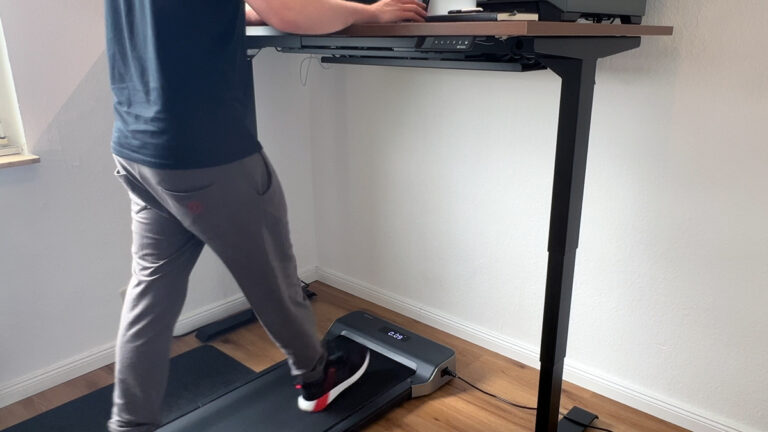
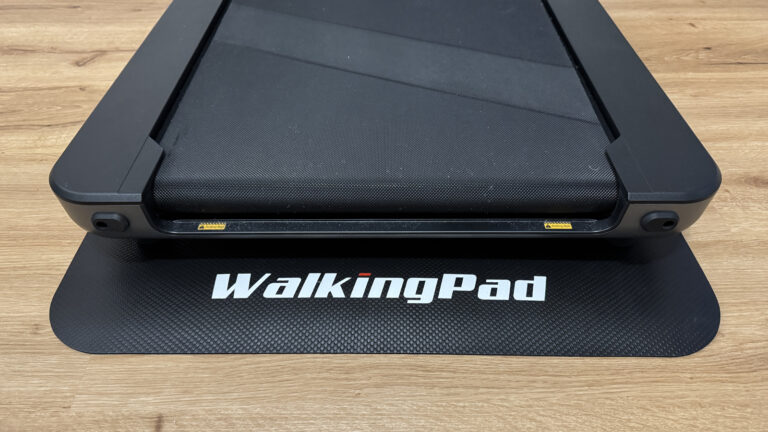
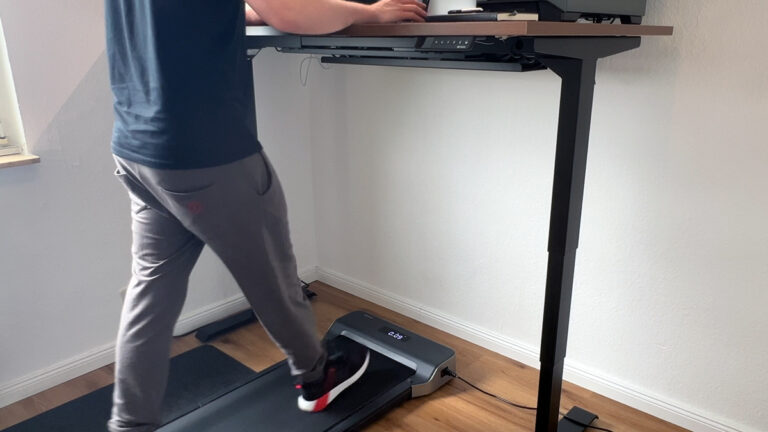
The biggest lever for more movement in the home office is a walking pad. In my test of the KUIPERS K1 (German review, sold in Germany only) I collected roughly 10,000 steps in about two hours of work at just 0.271 kWh and a fan noise that barely registers in the background. Internationally available alternatives with app and step counting are in my walking pad reviews, for example the WalkingPad Z1 and the WalkingPad A1 Pro.
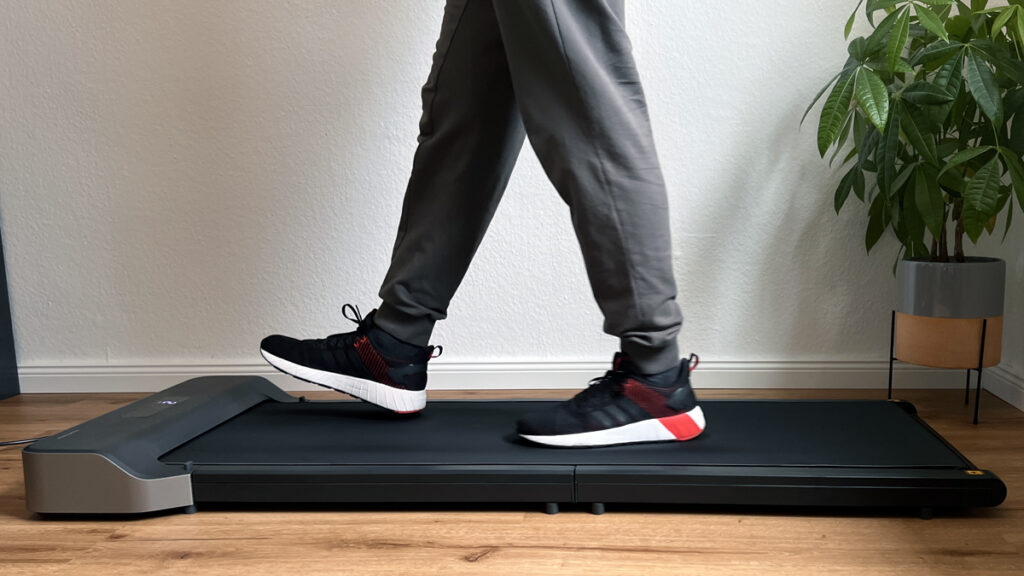
WalkingPad Z1 Review The Perfect Walking Pad for Most People!
Advertising: The product was provided to me for testing. My review remains unbiased and is based solely on my own experience and…
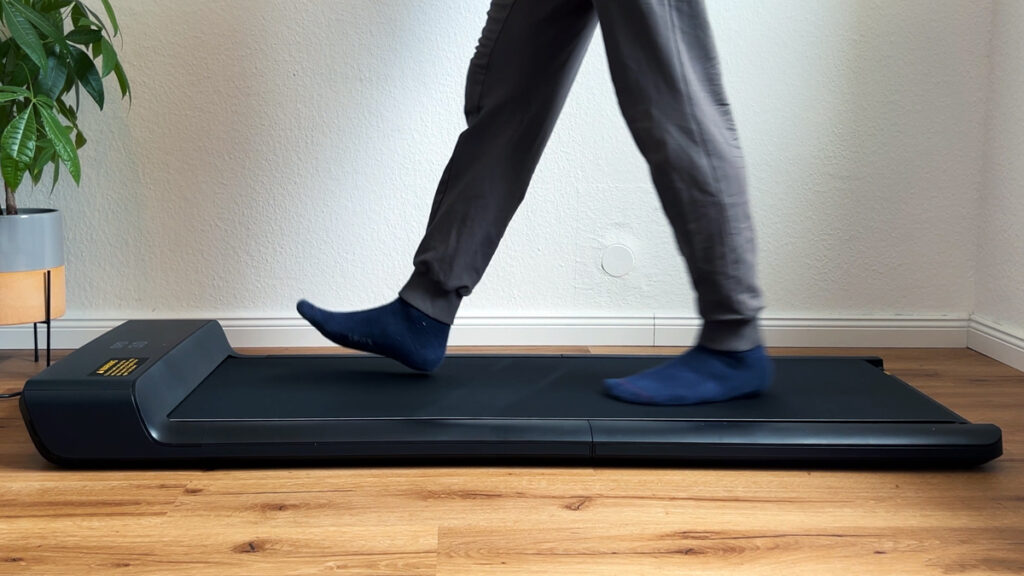
WalkingPad A1 Pro Review The most robust desk treadmill! (US+UK)
Advertising: The product was provided to me for testing. However, my evaluation is uninfluenced and based solely on my own experiences and…
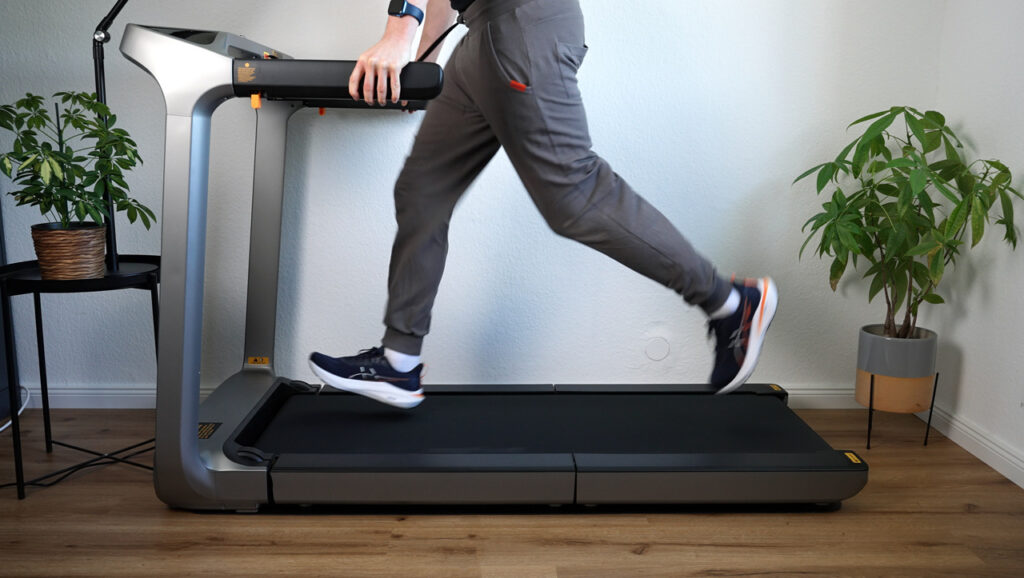
WalkingPad X218 Review The Fastest Folding Treadmill for Home
Advertising: The product was provided to me for testing. My review remains unbiased and is based solely on my own experience and…
Important for the combination: the walking pad raises your standing height by its own height. The Core3 at 128 cm was just about right for me at 1.86 m with a walking pad.
5. Small helpers for long working days
If you sit a lot, you often feel it in the lower back and neck. The cordless Bob & Brad EZBack Go straps to the chair backrest and massages for ten minutes with 4D shiatsu kneading nodes and heat. The Bob & Brad ThermoRed is a battery-powered heating belt for the lumbar area that you simply keep on while working. Neither replaces movement, but both are a sensible addition for breaks at the desk.
My setup and my order
If you build your home office step by step, I would choose this order:
- Chair: It affects your posture every minute. Seat depth and lumbar support have to fit.
- Desk: Stable at standing height, at least 125 cm, better 128 cm with a walking pad.
- Monitor: 27 to 32 inches with a height-adjustable stand, 4K from 32 inches.
- Walking pad: Once desk and chair fit, it brings the most movement per working day.
You can find all reviews in this area in the standing desks category and the walking pads category.
Frequently asked questions about the ergonomic home office
How high should a height-adjustable desk go?
At 1.86 m my ergonomic standing height was around 124 cm. A walking pad adds 7 to 13 cm. For tall people the desk should therefore reach at least 125 cm, better 128 cm.
Which office chair suits tall people?
Seat depth adjustment and a lumbar support adjustable in height and depth are decisive. The VALKENSTOL M8 is designed for up to 2.00 m and 150 kg according to the manufacturer and offers both.
Is a 4K monitor worth it in the home office?
From 32 inches, yes, because text and spreadsheets become much sharper. For pure office work a simpler model is enough, for photo and video editing a calibrated panel like the ASUS ProArt PA32UCDM pays off.
Can you really work on a walking pad?
Yes, at a constant, low speed. On the KUIPERS K1 I collected about 10,000 steps in around two hours while writing, using the mouse and editing videos.
More guides
- Robot Vacuum, Cordless Stick or Mattress Vacuum? The Right Combination for Your Home
- 10,000 Steps at Your Desk: How to Get Them on the Side with a Walking Pad
- Floor Mat for Your Walking Pad: What It Does Against Footfall and What to Look For
- Walking Pad Without Electricity: Does It Exist? Manual Treadmills, Running Costs and Alternatives
- Walking Pad and Desk Height: How High Does the Desk Need to Go? Deck Heights of All Models
- Walking Pad Power Consumption: What Does an Hour of Walking Really Cost? Measured Values
- How to Oil, Centre and Maintain a Walking Pad: The Guide from Thirteen Tests
- Walking Pad Speed: 6, 12 or 18 km/h? Which Pace You Really Need
- Foldable Walking Pads: Which Design Fits Your Home? All Folded Dimensions from My Tests
- WalkingPad Z1 vs. P1 vs. A1 Pro: Which Compact Walking Pad Is Right for You?
- Walking Pad Weight Limit: Which Models Carry 120, 135 or 136 kg (300 lb)?
- Walking Pad Noise: How Loud Are Under-Desk Treadmills Really? Measurements from My Tests