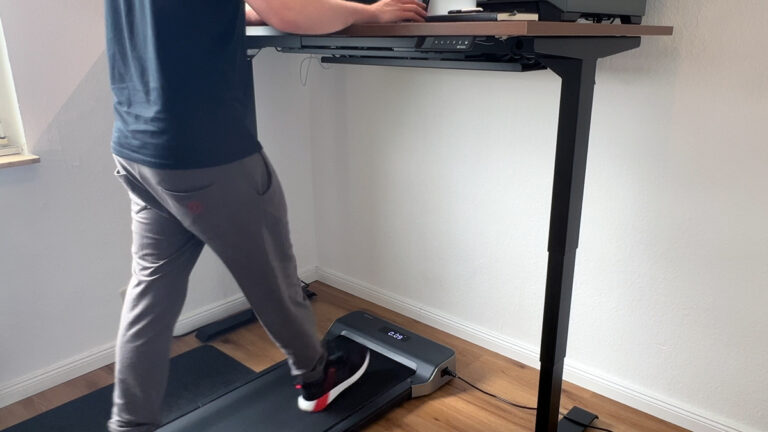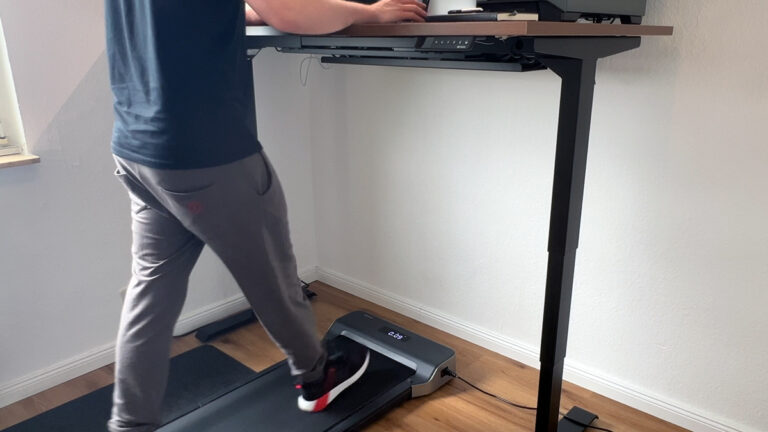

A walking pad needs little care, but those few steps decide whether it still runs quietly after two years or cracks, grinds and overheats the motor. With all thirteen devices from my tests it came down to the same three tasks: oiling the running surface, centring the belt and choosing the right surface. Here is my guide with the experience from the tests.
In short
Oil the running surface before the first start and then roughly every two to three months or every 30 hours of operation with pure silicone oil. Centre the belt with the supplied Allen key as soon as it drifts to one side. Place the device on a hard floor or a floor protection mat, never on deep-pile carpet.
1. Oiling: what with, how often and how
What with
Only with 100 percent silicone oil. Almost every model comes with a small bottle, the KUIPERS K1 even with two bottles plus an extension nozzle that gets the oil comfortably under the running surface. No WD-40, no machine oil, no cooking oil: they attack the belt and gum up the deck.
How often
Before the first use, then by feel: as soon as you hear a grinding sound or the belt has not run for a long time, add oil. As a rule of thumb, every two to three months or every 30 hours of operation has proven right. KUIPERS recommends about every six months for the K1, depending on daily use. Even on the Z1 with its brushless motor you should oil regularly, it takes load off the motor.
How
- Switch off the device and pull the plug.
- Lift the belt slightly on one side. On foldable models like the X214 or X218 I place one foot on the rear running surface and lift the belt with my free hand. For the Sperax I laid the unit on its side.
- Spread 5 to 10 ml of silicone oil in thin lines widely under the belt, on the K1 with the extension nozzle.
- Oil the belt on the other side in the same way.
- Switch on and let the belt run for at least 30 seconds at low speed so the oil spreads.
On the X218 the cracking noises disappeared after oiling, on the Z3 Hybrid+ running became noticeably quieter. Oiling is the single most effective step against noise.
2. Centring: when the belt drifts to one side
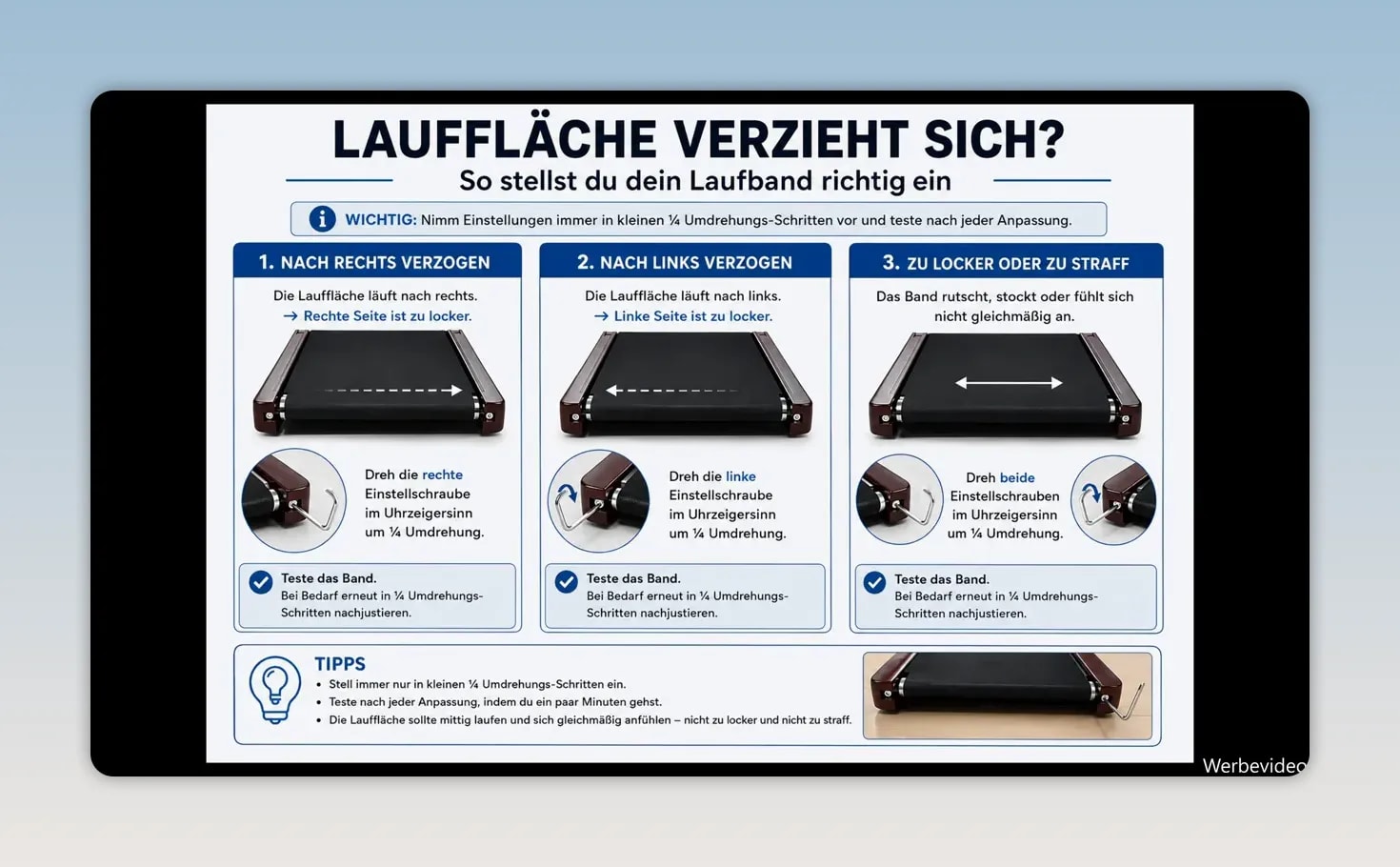
On almost every walking pad the running surface drifts slightly to the left or right over time. Then it rubs against the frame, gets louder and wears. At the rear of the unit sit two adjustment screws, the matching Allen key is included.
- Let the belt run at about 3 km/h and watch which side it drifts to.
- Turn the screw on the side the belt drifts to a quarter turn clockwise.
- Let it run for a minute and check. Readjust in quarter turns if needed.
- Never more than half a turn at once and never tighten both screws at the same time, otherwise the belt becomes too tight.
It pays to check right after unpacking: on the X214 and X218 I centred the belt before the first run, on the X218 several readjustments were needed at first. If the belt slips when you step on it, it is too loose and both screws are tightened evenly by a quarter turn.
3. The right surface
- Hard floor: Parquet, laminate, tiles or vinyl are ideal.
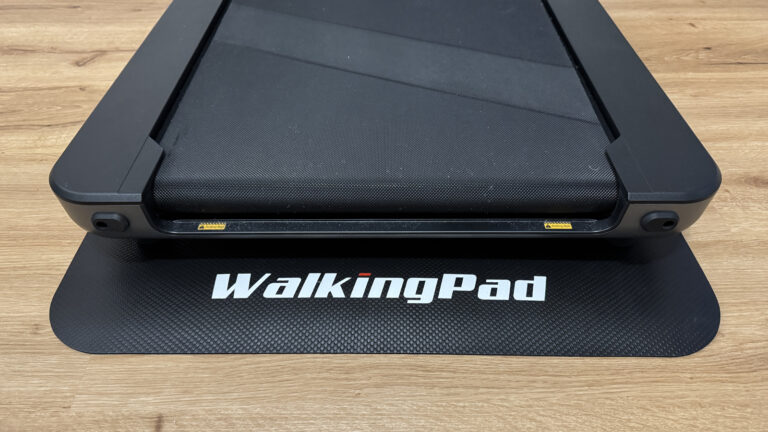
- Floor protection mat: A 3 to 6 mm mat made of TPE or rubber protects the floor from pressure marks and oil, dampens vibrations and footfall and keeps the device in place. The WalkingPad floor mat has proven itself for me.
- No deep-pile carpet: Fibres get pulled under the belt and sucked into the motor, the ventilation openings on the underside get blocked. Overheating is the result. On carpet, always put a firm mat underneath.
4. Cleaning and storage
- Vacuum dust and fibres around the belt and at the ventilation slots regularly.
- Wipe the belt with a slightly damp cloth, no water into the housing.
- Keep your fingers in the middle when folding and disconnect the power first.
- On the Z1 the belt is exposed when folded, so do not drag it over edges. Store P1 and A1 Pro lying down only, X214, X218, Z3 Hybrid+ and K1 may stand upright.
- On models with a safety key like the R2 or Z3 Hybrid+, remove the key if there are children in the household.
5. Typical problems and their fixes
| Symptom | Cause | Fix |
| Grinding or cracking noise | Belt dry or off-centre | Oil, then centre |
| Belt slips when you step on it | Belt too loose | Tighten both screws evenly by a quarter turn |
| Device switches off after longer use | Overheating protection, often at high room temperature or blocked ventilation | Take a break, check the surface, clean the ventilation slots. On the Z1 the manufacturer recommends a break after one hour |
| Fan runs loudly | Normal cooling operation | Cannot be changed, quieter are fanless models like the Z1 or Z3 Hybrid+ |
| Beeping at every speed change | Control tones | Mute on the X214, K1 and via the app on the Z3 Hybrid+ |
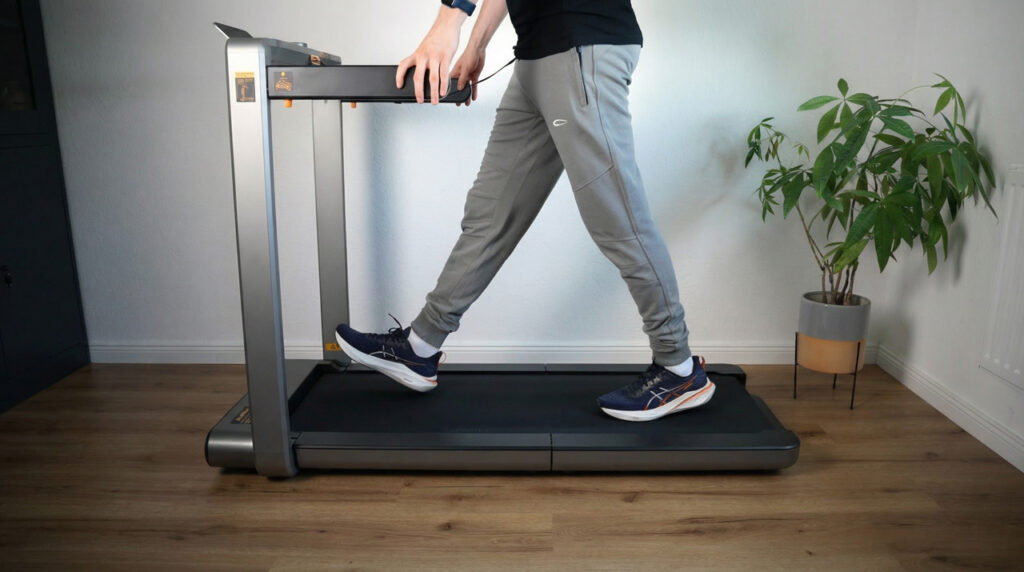
WalkingPad X214 Review The Best Upgrade for Home Office & Running?
Advertising: The product was provided to me for testing. My review remains unbiased and is based solely on my own experience and…

WalkingPad Floor Protection Mat Review – Durable, Non-Slip Protection for Your Floor
WalkingPad Floor Protection Mat Review Introduction In this review, we thoroughly tested the WalkingPad Floor Protection Mat, both with walking desk treadmills…
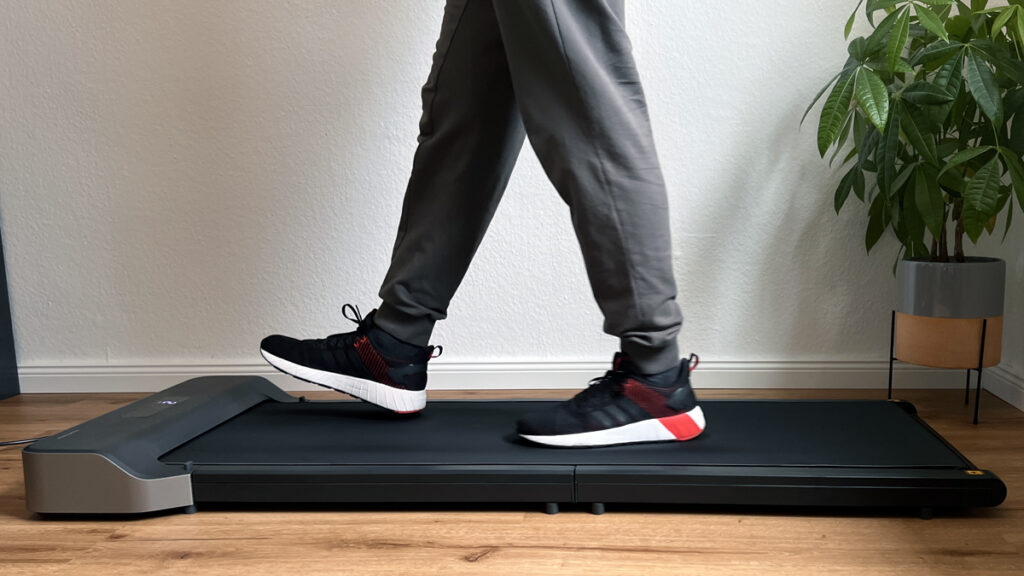
WalkingPad Z1 Review The Perfect Walking Pad for Most People!
Advertising: The product was provided to me for testing. My review remains unbiased and is based solely on my own experience and…
My verdict
Oil, centre, hard floor: a walking pad needs nothing more to run quietly for years. Plan the first two steps right when unpacking, then you start without cracking and with a protected motor. You can see which models have proven themselves in everyday use in my walking pad reviews.
Frequently asked questions about walking pad maintenance
How often do I need to oil a walking pad?
Before the first start and then about every two to three months or every 30 hours of operation, at the latest when you hear a grinding sound.
Which oil is suitable for walking pads?
Only 100 percent silicone oil. It comes with most devices. WD-40, machine oil or cooking oil damage belt and deck.
What to do if the belt drifts to one side?
With the supplied Allen key, turn the rear adjustment screw on the side the belt drifts to a quarter turn clockwise and check.
Can a walking pad stand on carpet?
Not on deep-pile carpet, because fibres get into the motor and block the ventilation. On carpet, always place a firm floor protection mat underneath.