
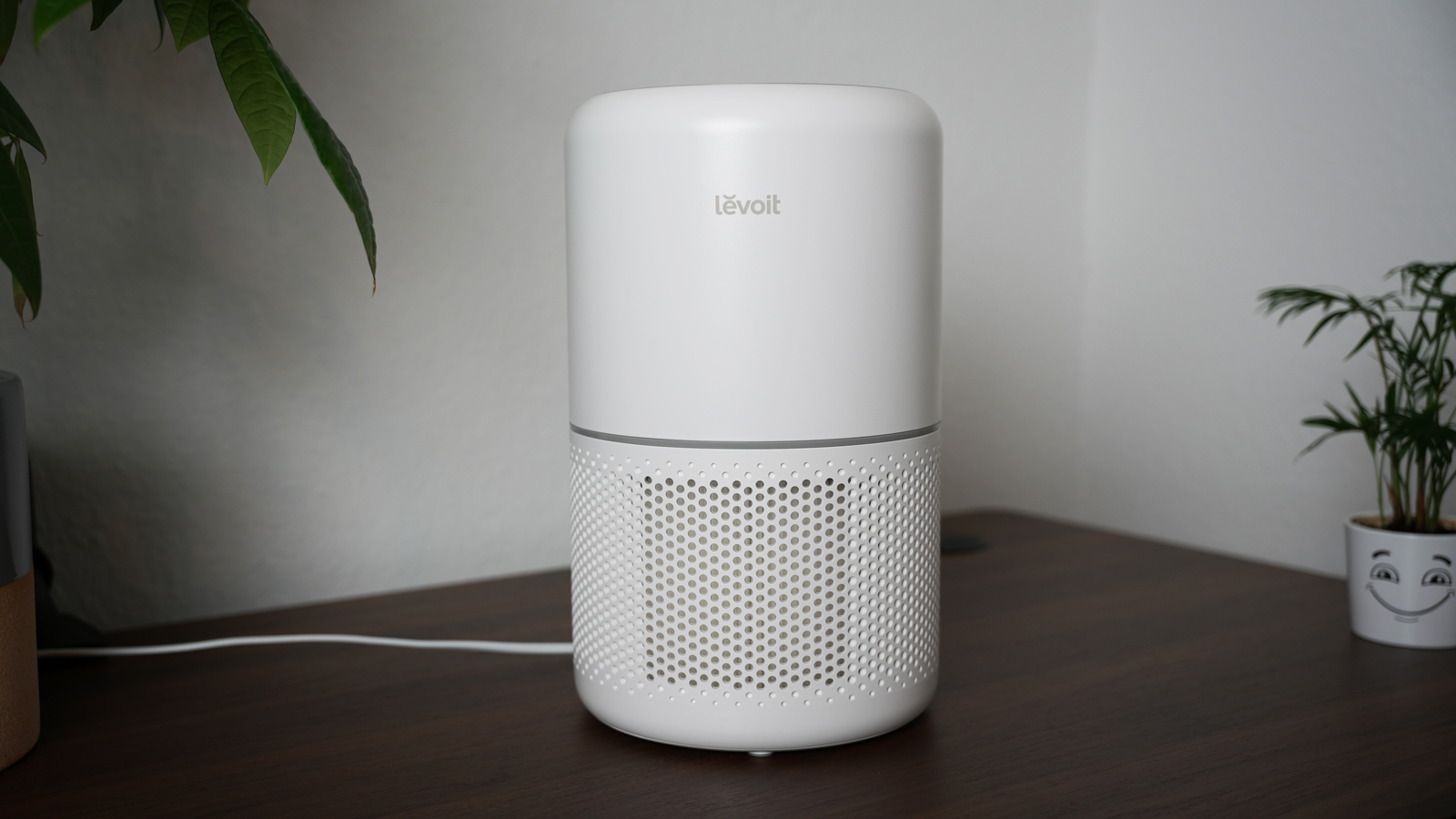
Air purifiers are advertised with terms like CADR, HEPA H13 and room size that confuse more than they help when buying. Yet three numbers are enough to decide whether a device fits your room: the airflow, the noise level in night mode and the filter costs per year. I have tested the Levoit Core 300S and the Blueair Blue Pure Mini Max and explain here how to read the specs and which device suits which room. The Blueair review is currently only available in German.
In short
The CADR value tells you how many cubic metres of air a device cleans per hour. For a 20 square metre (215 sq ft) bedroom around 240 cubic metres per hour is enough, which is the Levoit Core 300S with almost five air changes per hour. For a desk or a child’s room up to 20 square metres the compact Blueair Mini Max is sufficient. Plan for filter costs of one filter about every six months.
CADR: the most important number
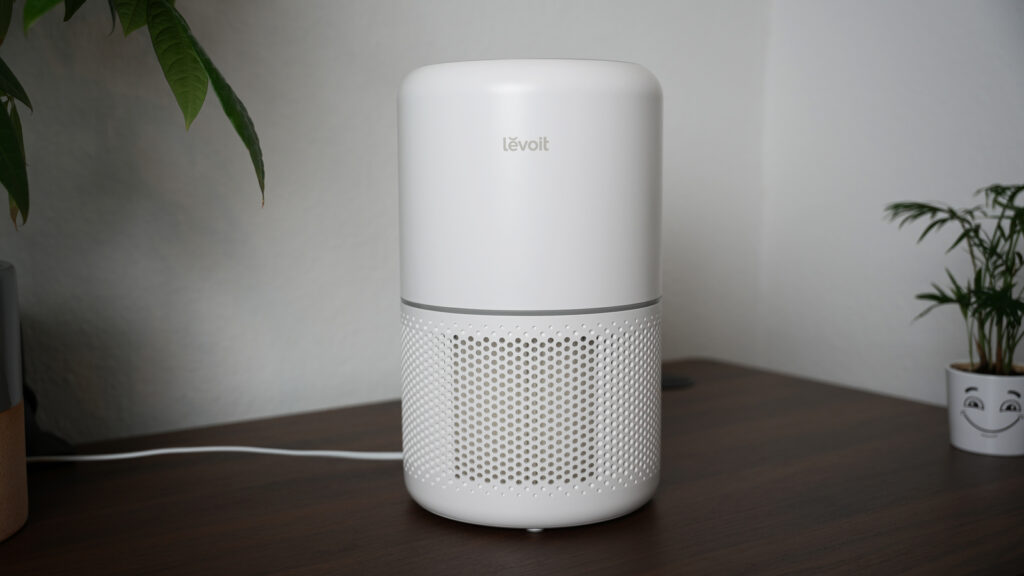
CADR stands for Clean Air Delivery Rate and indicates how much cleaned air a device delivers per hour. The Levoit Core 300S is rated at 240 cubic metres per hour, or 141 CFM. For the room size you multiply floor area by ceiling height: a 20 square metre bedroom with a 2.5 metre ceiling holds 50 cubic metres of air. 240 divided by 50 gives almost five air changes per hour, more than the usually recommended two to four. Levoit specifies rooms up to 50 square metres, where it comes to just under two air changes.
| Room | Air volume at 2.5 m ceiling | CADR needed for 4 air changes | Suitable device from my tests |
| Child’s room, office 12 m² (130 sq ft) | 30 m³ | approx. 120 m³/h | Blueair Mini Max |
| Bedroom 20 m² (215 sq ft) | 50 m³ | approx. 200 m³/h | Levoit Core 300S |
| Living room 35 m² (375 sq ft) | 88 m³ | approx. 350 m³/h | Core 300S with two air changes, otherwise a larger model |
| Open living area 50 m² (540 sq ft) | 125 m³ | approx. 500 m³/h | larger device needed |
Filters: HEPA H13, pre-filter and activated carbon
Both devices filter in several stages. The Levoit Core 300S combines a pre-filter, an H13 HEPA filter and activated carbon and removes 99.97 percent of particles from 0.3 microns according to the manufacturer. The Blueair Mini Max combines a particle and activated carbon filter with a fabric pre-filter and filters at least 99.97 percent of particles down to 0.1 microns according to the manufacturer. Activated carbon matters for odours and cooking fumes, HEPA for pollen, fine dust and pet hair.
Noise: night mode is what counts
An air purifier runs in the bedroom at night, so the quietest level counts. The Core 300S reaches around 31.5 decibels in night mode, which is whisper-quiet, while level 3 is 58 decibels and clearly audible. The Blueair Mini Max sits between 32.5 decibels on level 1 and 51.5 decibels on level 3. For a quick clean after cooking or airing you briefly use the high level, for the night the lowest one is enough.
Power consumption and filter costs
The Core 300S draws a maximum of 22 watts on the highest level, considerably less in night mode. Even in continuous operation the consumption stays low. The filters cost more than the electricity: on the Core 300S a filter should be replaced about every six months, and there are variants for pets or mould. On the Blueair Mini Max the filter is also replaced about every six months and is cheaper.
| Levoit Core 300S | Blueair Blue Pure Mini Max | |
| CADR / room size | 240 m³/h, up to 50 m² | up to approx. 20 m², 30 minutes for 20 m² |
| Filters | pre-filter, H13 HEPA, activated carbon | fabric pre-filter, particle and activated carbon filter |
| Noise | 31.5 dB night mode, 58 dB level 3 | 32.5 dB level 1, 51.5 dB level 3 |
| Power consumption | max. 22 W | low |
| Filter change | about every 6 months | about every 6 months |
| Controls | touch, app, auto mode, timer, laser sensor | two buttons, no app, no timer |
| Weight | 2.72 kg (6 lb) | 1.3 kg (2.9 lb) |
| My rating | 4.8 / 5 | 4.5 / 5 |
App and sensor: do you need them?
The Core 300S measures air quality with a laser sensor and shows it as a colour code from blue to red on the device and in the app. In auto mode it adjusts the level itself, which is the real comfort in everyday life: after cooking it turns up, at night it stays quiet. Timer and schedules come on top. The Blueair Mini Max does without all that and is operated with two buttons, but at 1.3 kg it is light enough to carry between desk and child’s room.
Which device for whom?
- Bedroom up to 25 square metres, allergy sufferers, pets: Levoit Core 300S with auto mode and night mode.
- Desk, child’s room, travel: Blueair Mini Max, small, light, cheap to run.
- Living room over 30 square metres: A device with a considerably higher CADR or two devices.
- Summer with tilted windows: Both, because they pull pollen and fine dust out of the incoming air. They do not help against heat.
My verdict
Convert the CADR to your room, check the noise of the quietest level and the filter costs per year. That rules out most bad buys. The Levoit Core 300S is my recommendation for bedrooms and medium-sized rooms, the Blueair Mini Max for small rooms. You can find the reviews in the air purifiers category.
Frequently asked questions about buying an air purifier
What does CADR mean for an air purifier?
The Clean Air Delivery Rate indicates how many cubic metres of air are cleaned per hour. The Levoit Core 300S is rated at 240 m³/h, which gives almost five air changes per hour in a 20 m² bedroom.
How much power does the Levoit Core 300S use?
A maximum of 22 watts on the highest level, considerably less in night mode. The running costs come mainly from the filters, replaced about every six months.
How loud is an air purifier at night?
The Core 300S reaches around 31.5 dB in night mode, the Blueair Mini Max 32.5 dB on level 1. Both are suitable for bedrooms.
Which air purifier for a small room?
The Blueair Blue Pure Mini Max cleans rooms up to about 20 m² in around 30 minutes, weighs 1.3 kg and works without an app.
More guides
- Ergonomic Home Office Setup: Desk, Chair, Monitor and Movement from My Tests
- Robot Vacuum, Cordless Stick or Mattress Vacuum? The Right Combination for Your Home
- 10,000 Steps at Your Desk: How to Get Them on the Side with a Walking Pad
- Floor Mat for Your Walking Pad: What It Does Against Footfall and What to Look For
- Walking Pad Without Electricity: Does It Exist? Manual Treadmills, Running Costs and Alternatives
- Walking Pad and Desk Height: How High Does the Desk Need to Go? Deck Heights of All Models
- Walking Pad Power Consumption: What Does an Hour of Walking Really Cost? Measured Values
- How to Oil, Centre and Maintain a Walking Pad: The Guide from Thirteen Tests
- Walking Pad Speed: 6, 12 or 18 km/h? Which Pace You Really Need
- Foldable Walking Pads: Which Design Fits Your Home? All Folded Dimensions from My Tests
- WalkingPad Z1 vs. P1 vs. A1 Pro: Which Compact Walking Pad Is Right for You?
- Walking Pad Weight Limit: Which Models Carry 120, 135 or 136 kg (300 lb)?
- Walking Pad Noise: How Loud Are Under-Desk Treadmills Really? Measurements from My Tests